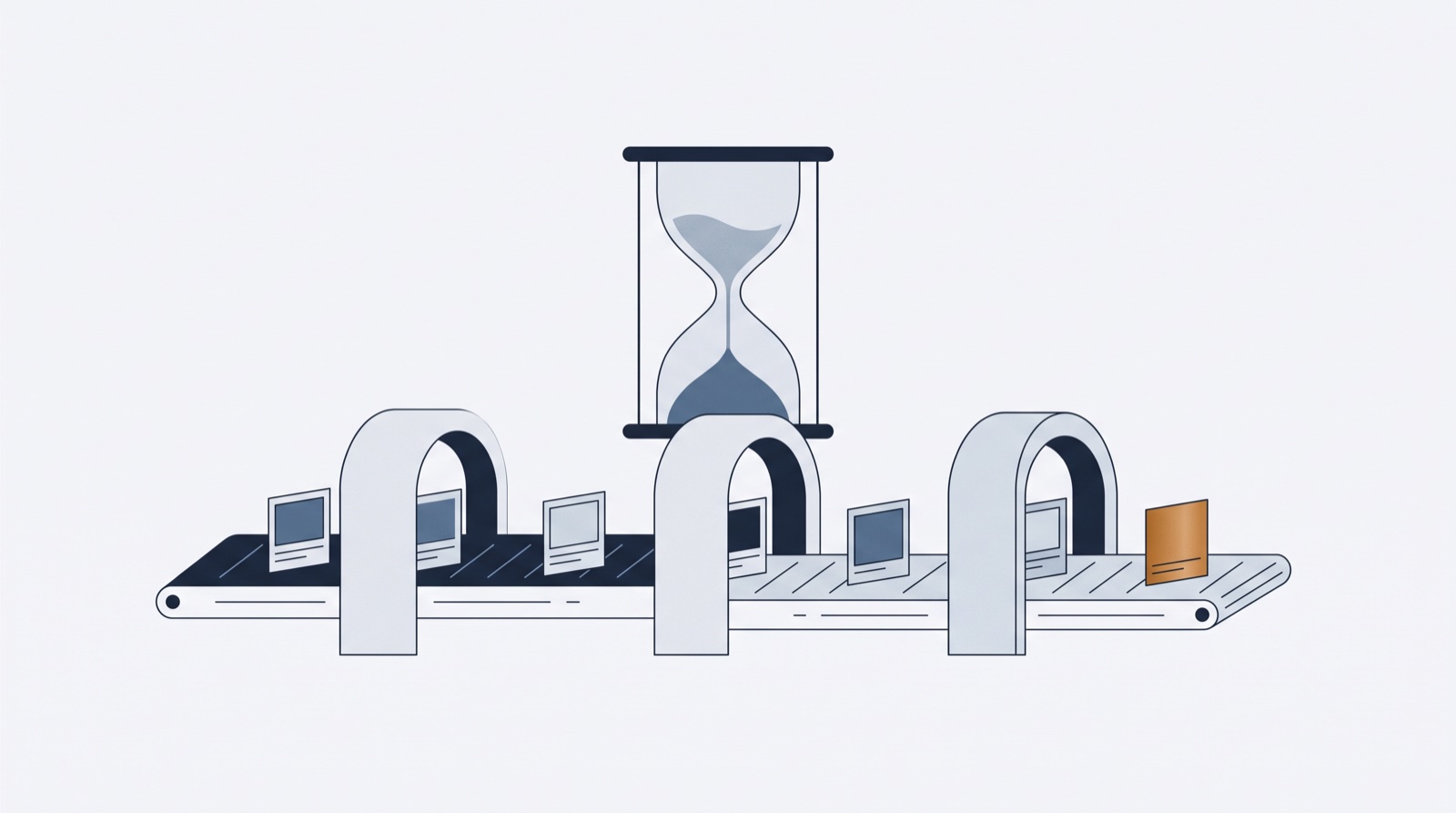
The math of daily content creation never adds up, and it’s not the writing’s fault. It’s the switching: open the app, remember the strategy, find a photo, draft, second-guess, publish, repeat tomorrow. Twenty minutes of work wrapped in forty of warm-up — every single day.
Batching pays the warm-up cost once. Here’s a real one-day schedule — not the influencer version where “film 30 Reels” is one bullet point — plus the two rules that keep it from collapsing.
The two rules that make batching work
Never polish while choosing. Never generate while polishing.
Content work has three modes: generating (expansive — volume, options, no judgment), choosing (decisive — fast yes/no, no fixing), and finishing (precise — polish, media, scheduling). They use different kinds of attention, and every switch between them costs you the next fifteen minutes.
Rule one: one mode at a time, with a hard boundary. Rule two: volume in the first mode, mercy in none. Generate three times what you need, kill half without guilt at triage, and only the survivors earn polish. (This is the same editor’s logic as handling 300 AI ideas — batching just gives it a calendar.)
The batching day, hour by hour
| Time | Mode | What happens |
|---|---|---|
| 9:00 – 9:45 | Plan | Review last month, set this month’s pillars and slots (the 30-day skeleton). |
| 9:45 – 11:00 | Generate | You + your AI: batch-prompt ideas per pillar, tables not one-offs. Target 3× what you need. |
| 11:00 – 11:15 | Break | Real one. The next mode needs a fresh head. |
| 11:15 – 12:15 | Choose | Triage the whole pool: keep / archive, no editing allowed. Aim to leave with ~35 keepers. |
| 12:15 – 13:00 | Lunch | Away from the screen; triage decisions settle. |
| 13:00 – 14:30 | Media | Match visuals: shoot the gaps, pick from the camera roll, drag onto the grid, check composition. |
| 14:30 – 16:00 | Finish | Polish captions in place (sentence-level fixes, not rewrites), hashtag sets on, alt text. |
| 16:00 – 16:30 | Schedule | Queue the month: auto-post what can go alone, Telegram delivery for hand-placed posts. |
Six focused hours, one brand (or two small ones), month done. Multi-brand operators: run the same day but batch each mode across all profiles — one generating session feeds three rooms.
Life after the batch
The month now runs itself: posts go out at the windows you chose once, and your only daily contact with content is answering comments — from a phone, like a person. Keep one or two weekly slots free for the spontaneous and the topical; the queue absorbs everything else.
And the buffer pool — those triaged-but-unscheduled keepers — quietly becomes your favorite asset: any empty slot, any sudden opportunity, sort by random, pick one, done. In ContentFast the whole day happens in one place: import the generated table, triage the cards, drag media onto the grid, polish in place, schedule the month. One tab, six hours, thirty days of quiet.