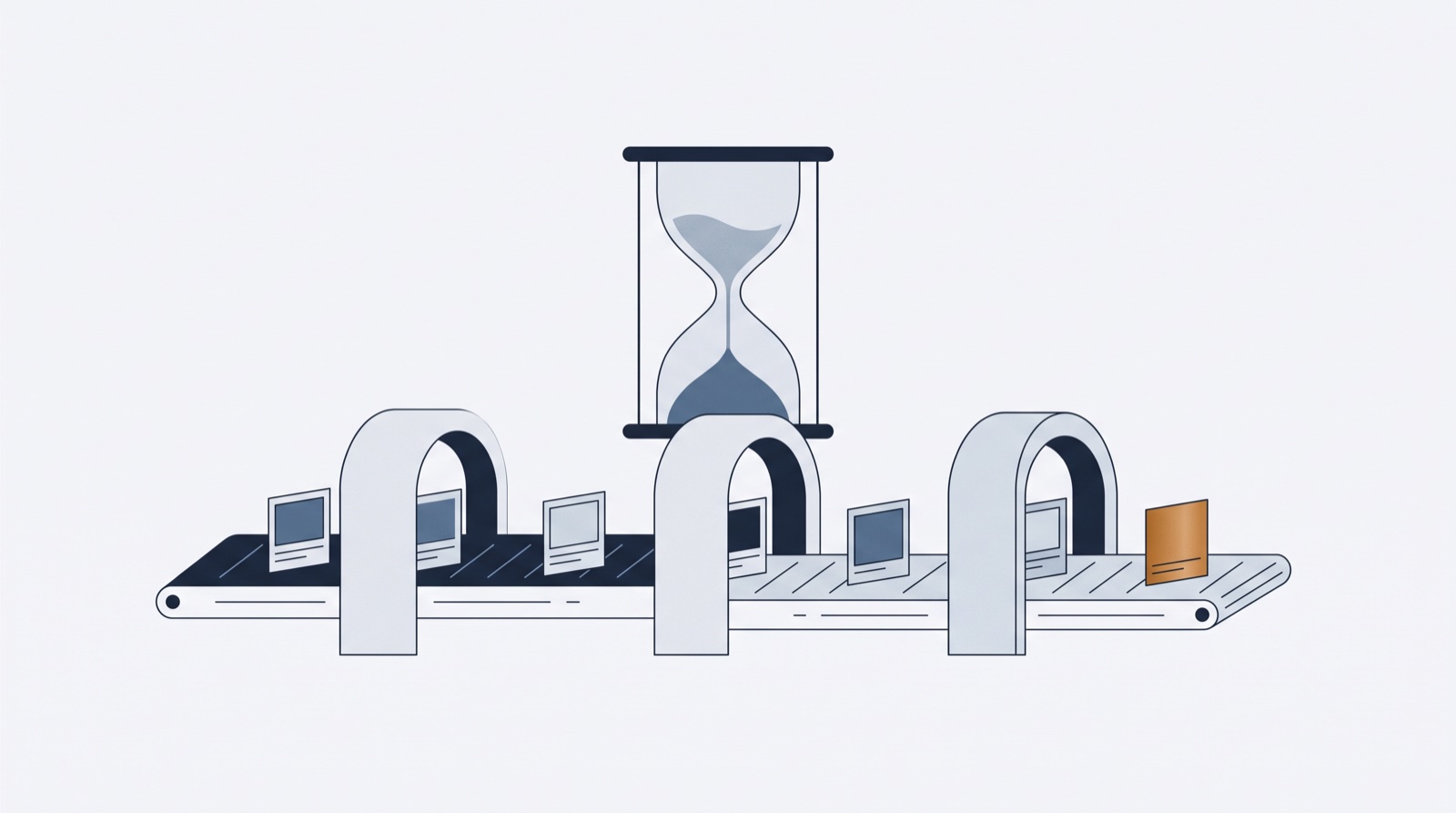
Every content calendar starts the same way: a burst of optimism, a beautiful grid, seven post types, daily stories. And around day nine — silence. Not because you’re lazy; because the plan was written by the most energetic version of you for a month that doesn’t contain clients, colds or life.
So this template optimizes for the only metric that matters in month one: survival. Twelve posts, four themes, one planning hour. Everything else is a bonus round.
The four pillars (you don’t need seven)
A pillar is a recurring theme you never have to re-invent. Four cover everything a small brand actually needs:
- Show the work. Finished projects, befores-and-afters, process shots, results. Proof you do what you say.
- Teach. One useful thing your audience can apply — a tip, a mistake to avoid, a mini-tutorial. This is what gets saved and shared.
- Belong. The human layer: your face, your opinions, your studio dog, client stories. This is what gets people to stay.
- Ask. The post where you actually sell — an offer, open slots, a product, a lead magnet. Once a week, without apology.
The ratio does the positioning work for you: three posts of generosity and personality carry each ask. Nobody unfollows a feed like that for selling.
The week that repeats four times
Assign pillars to weekdays once, and the calendar fills itself. The default I give every new project:
| Day | Pillar | Example |
|---|---|---|
| Tuesday | Teach | “Three things I check before every shoot” |
| Thursday | Show the work | Last week’s project, two frames, one sentence of context |
| Saturday | Belong / Ask (alternating) | Week 1–3: studio life. Week 4: “September slots are open” |
That’s twelve or thirteen posts. Tuesdays and Thursdays also happen to sit in the strongest engagement windows of the week, which is a pleasant coincidence you may as well cash.
Fill the slots in one sitting
A calendar is a container. Ideas are cargo. Load the ship once.
With the structure set, generating ideas is the easy part: ask your AI for ten ideas per pillar in one chat (the prompt library has a ready-made ask for exactly this), import the lot, and triage like an editor. Keep the best twelve, park the rest in your buffer pool.
Then schedule the whole month in one pass and close the tab. The calendar’s job is to make content a monthly decision instead of a daily one — if you’re still deciding what to post at breakfast, the calendar isn’t finished.
Day nine, revisited
The day-nine crisis still comes — a launch eats your week, a kid gets sick. With this system the crisis meets a scheduled queue instead of an empty grid, and the worst case is that Saturday’s post slides to Sunday. The calendar survives, and next month you plan in an hour again, slightly smug.
Survive one month, then earn the upgrades: a fourth weekly slot, a Reels experiment, a second pillar rotation. Growth built on a kept promise compounds; growth built on a fantasy schedule resets to zero every day nine.