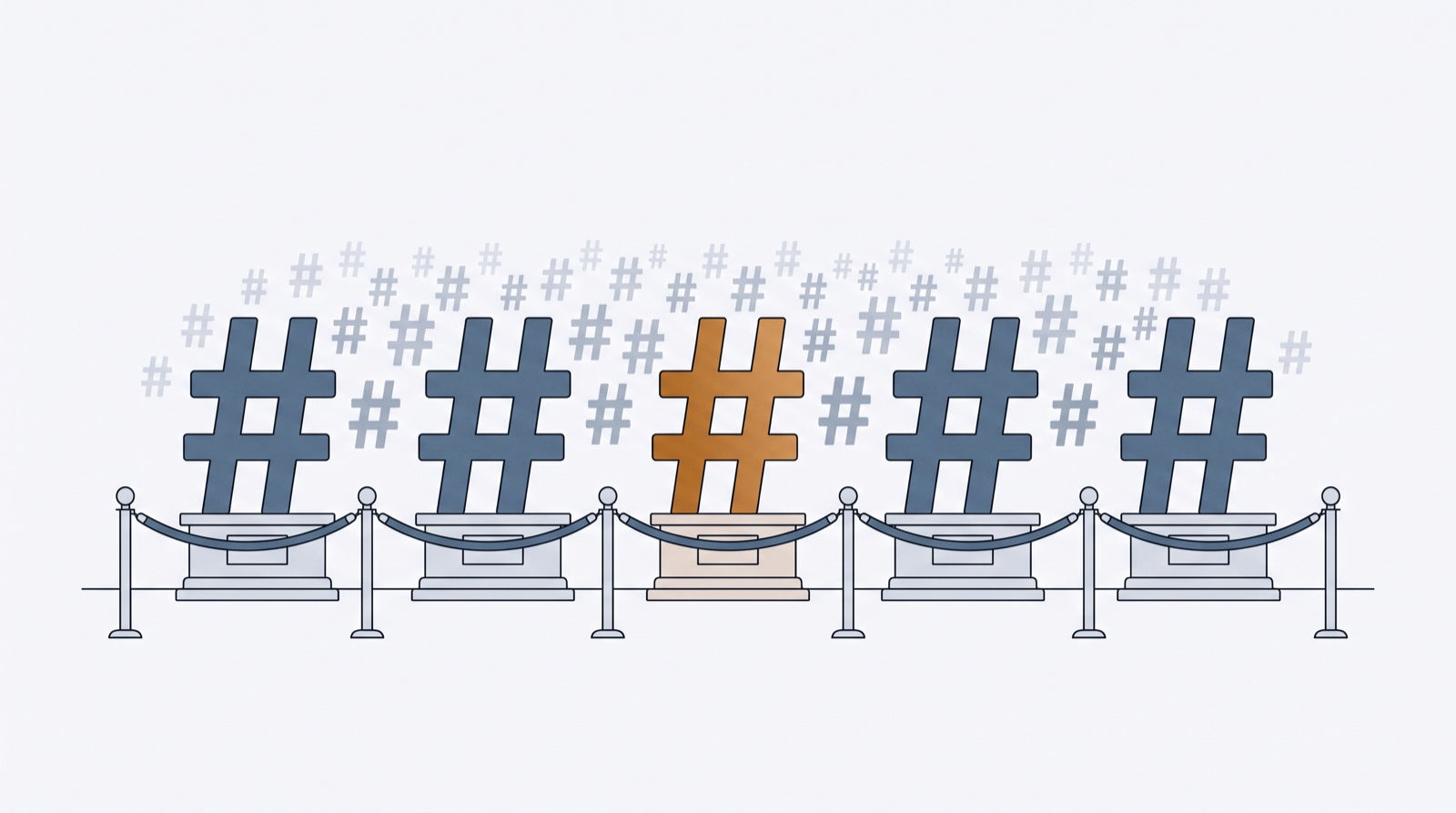
For a decade, hashtag advice was a numbers game: eleven! thirty! three-to-five, but hide them in the first comment! In December 2025 Instagram ended the debate with a hard rule — five hashtags per post or Reel, enforced at publish time. Try to add a sixth and the app blocks it or quietly strips the extras. Caption or comments, doesn’t matter; the count is the count.
The cap made official what the data had shown for years. Head of Instagram Adam Mosseri had been saying it in plain words: hashtags don’t improve reach. So what are they for now, and what do you do with the thirty-tag blocks saved in your notes app? Let’s clean this up.
From traffic source to classification signal
Hashtags stopped being doors people walk through. They’re labels the librarian reads.
Old model: users browse #weddingphotographer, find you, follow. That behavior mostly died — almost nobody browses hashtag feeds anymore. New model: Instagram’s recommendation engine decides who sees your post, and hashtags are one of the cheaper signals it reads to understand what the post is about.
That reframe answers every tactical question. Should tags be huge or niche? Niche — precision beats volume when the reader is an algorithm. Do banned-tag lists and “shadowban checkers” matter? Barely — irrelevance hurts you more than any spooky tag. Is five enough? Five precise labels classify a post better than thirty vague ones ever did.
How to choose your five
A split that covers the bases without wasting a slot:
- 1 niche tag — the narrowest honest description of what you do (#familyphotographeraustin, not #photography).
- 2 topic tags — what this specific post shows or teaches.
- 1 format or community tag — the conversation this content belongs to (#reelstutorial, #behindthescenes, a challenge tag).
- 1 brand tag — yours. Nobody searches it yet; it builds your archive and lets clients tag you back.
Build three or four of these five-packs per brand — one per content pillar — and stop re-deciding at publish time. In ContentFast hashtag sets are saved per brand profile and applied to a post in one click, which is exactly the level of thought hashtags deserve in 2026: one click.
Where discovery actually moved
The reach hashtags never really delivered now comes from content understanding: Instagram reads your caption text, your on-screen text, even what’s visible in the frame. Captions are indexed for search. Which means the discovery work moved to writing captions with real keywords in them — the words your ideal follower would type, said naturally.
“Golden-hour family session in Zilker Park” outperforms “moments like these 🥹” for search, every time, and reads better anyway. Add descriptive alt text while you’re at it; it helps both accessibility and classification. (The same write-for-machines-by-writing-clearly logic powers getting cited by AI assistants — it’s one skill now.)
So: five relevant tags, chosen once per pillar, applied in one click — and the attention you used to spend on hashtag archaeology goes into captions and posting when your audience is awake. That trade wins every month of 2026.